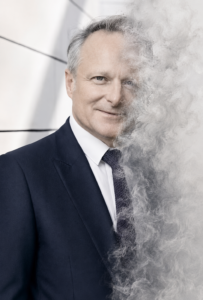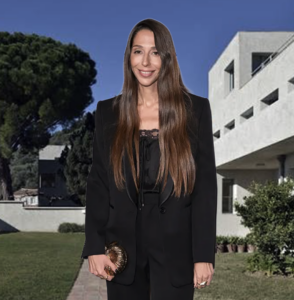
A discreet chime has echoed through the hushed corridors of Givenchy. As of this Friday, the house hands over its keys to Amandine Ohayon, a seasoned figure in fashion and beauty, stepping into the role as one might enter an impeccably ordered drawing room, mindful not to leave ambitions lying about.
Her arrival sets off a gentle game of musical chairs at cousin house Dior. Alessandro Valenti, until now the captain of the Givenchy ship, folds his charts and crosses the inner courtyard to Christian Dior Couture, where he will serve as second-in-command overseeing the hard currency of commerce. A strategic post, to be sure, though one that carries the faint air of a gilded sideline.
Ohayon will report to Pietro Beccari, recently anointed grand orchestrator of LVMH’s fashion division, already stacking titles the way others collect medals. Around him revolves an empire of names that gleam like ancestral coats of arms: Fendi, Celine, Loewe, Kenzo, Marc Jacobs, Pucci, Patou. The table is long, and the seats are dearly priced. Continue reading
Under Joshua Schulman’s leadership, Burberry is repositioning its brand by reframing British luxury as a more universal and commercially legible proposition. The strategy reflects a broader effort to sharpen the house’s identity at a time when luxury consumers are increasingly selective, prioritizing clarity, relevance, and value alignment over abstract brand storytelling.
I remain deeply astonished, and at times even hurt, to encounter people who have known me for more than fifty years and who, suddenly, seem to be discovering me anew by questioning my abilities. For a long time, I wondered why such doubt emerged so late, like suspicion out of season. Gradually, the answer made itself clear.
London is set to reconnect with the buzz of the runways this February, as it hosts a new edition of its Fashion Week, whose schedule promises to be both dense and highly symbolic. Between long-awaited returns and emotionally charged farewells, the British capital will unveil the Autumn Winter 2025/26 collections over nearly a week of creative encounters.
For nearly twenty years, Kim Jones did not merely design clothes. He embodied a central figure of globalized creative capitalism, an ecosystem in which individual talent becomes a strategic resource, exploited at an industrial pace. His exemplary career within LVMH tells less the story of a personal success than that of a cultural production model built on intensity, permanent mobility, and the fusion of creative identity with economic machinery.
Femininity is not measured in trophies or calendars. It moves. It thinks. It remembers. It advances like an inner sentence that nothing truly interrupts.
Antony Price, the flamboyant designer whose iconic silhouettes dressed members of Roxy Music, Duran Duran and even Queen Camilla, passed away on Wednesday at the age of 80.
Pieter Mulier moves through fashion the way some men move through life, with the anxious elegance of those who know destiny enjoys changing its mind at the last moment. As artistic director at Alaïa, he has put breath back into a house once thought frozen, as one might crack open a window in a room admired too long in silence. Since 2021, something has begun to beat again at Alaïa, and Richemont, not exactly known for sentimentality, has grown attached. One does not easily let go of a man who reminds you that clothing can still have a soul.
We live in a marvelous age: everyone is a specialist in everything, provided they have never practiced anything. Knowledge is deemed suspicious, experience arrogant, and competence downright indecent. Today, it is enough to speak in order to exist, and better still: to speak badly, and above all, at great length. Opinion has become a career, and ignorance a posture.

It all began one Saturday on an elegant street in Belgravia. Motcomb Street was then home to only one Jimmy Choo boutique, the tiny epicenter of a still-young brand. Hannah Colman sold shoes there on weekends, never imagining that this hushed space would become the starting point of a decades-long story.
Consumers still believe they are choosing. They manipulate images of themselves, virtually try on a lipstick or a hairstyle, and call this freedom. In reality, the machine is already watching, already learning, already sorting.
There is something about Maximilian Davis that suggests he moves through the world convinced it cannot quite muster the strength to disturb his inner calm. Even the false fire alarm that drove the entire Ferragamo headquarters onto Milan’s freezing sidewalks only earned from him a gentle look, almost apologetic toward a fate that sometimes insists on making unnecessary noise. Everyone else shivered. He merely seemed to wait for reality to regain its composure.
Salt & Stone has emerged as one of the most dynamic players in the body-care market by turning an everyday product into a major commercial success. The California-based brand has built a business valued at 140 million dollars thanks to a flagship deodorant that has become a top seller on both Amazon and Sephora.
Rumor has it that the Prince of Medici snatched the position from LVMH for the presidency of the Comité Colbert with the same ease he grabs a “Money paint ” at a private sale: silently, but leaving everyone stunned.
The iconic British house Burberry is consolidating its management team as its sales rebound, particularly in key markets such as the United States and China. In a phase of strategic revitalization, the group has announced two internal appointments aimed at bolstering its executive team.
Williams offers us yet another celestial illumination, dressed in Adidas and aphorisms. That evening, under the New York spotlights, he didn’t just accept an award: he delivered a revelation. A sneaker-clad homily. The “shoe of the year” is a nice touch, but above all, it brought us the “quote of the decade.”
Chanel made its big comeback in New York yesterday with its Métiers d’Art show the first under Matthieu Blazy’s “little pompadour,” a trial by fire that sent a jolt through the city, or at least through everyone who knew where the subway entrance actually was.
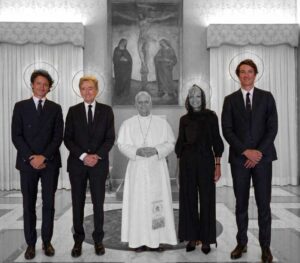
The chief executive of the British Fashion Council, described the Dame du Châtelet, chairwoman and CEO of “Christian J’ADior”, as “one of the most visionary and influential leaders in global fashion a figure whose impact extends far beyond the company itself to shape contemporary culture.” A polite, perfectly calibrated turn of phrase that, in itself, summarised the general mood of the evening: an unqualified celebration of institutional power.
Born in Paris in 1989, David Benedek fell into perfumery the way others fall into the sewers of Paris except his version smelled of jasmine and bargain-basement vetiver. Between two snacks and three spelling tests, his grandmother Édith taught him the sacred art of the perfume bottle and was already predicting a grand destiny for him: “My dear boy, one day you’ll be swallowed by an empire à la Jacquemus, and then you’ll know glory… or Excel spreadsheet purgatory.” Visionary, that Édith.
In the bustling streets of Seoul, where the crowd moves like an invisible current, Louis Vuitton has opened a new space. It is no longer just a store, but a place that aims to tell a story blending the memory of a house with the appetite of an age hungry for experiences. One might see a paradox in it: to win back a distracted younger generation, the answer is not fewer signs, but more, more shapes, more symbols, more fleeting moments to consume.
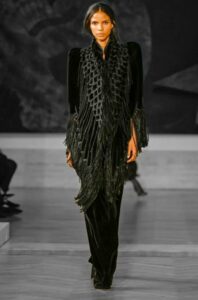
After the release of her mini-documentary charting her career change, broadcast on an international platform, the former singer turned luxury ready-to-wear couturière makes a triumphant return to the studio with a pre-autumn collection defined by sharp lines, considered draping and fluid silhouettes, designed to accompany women from morning until night.